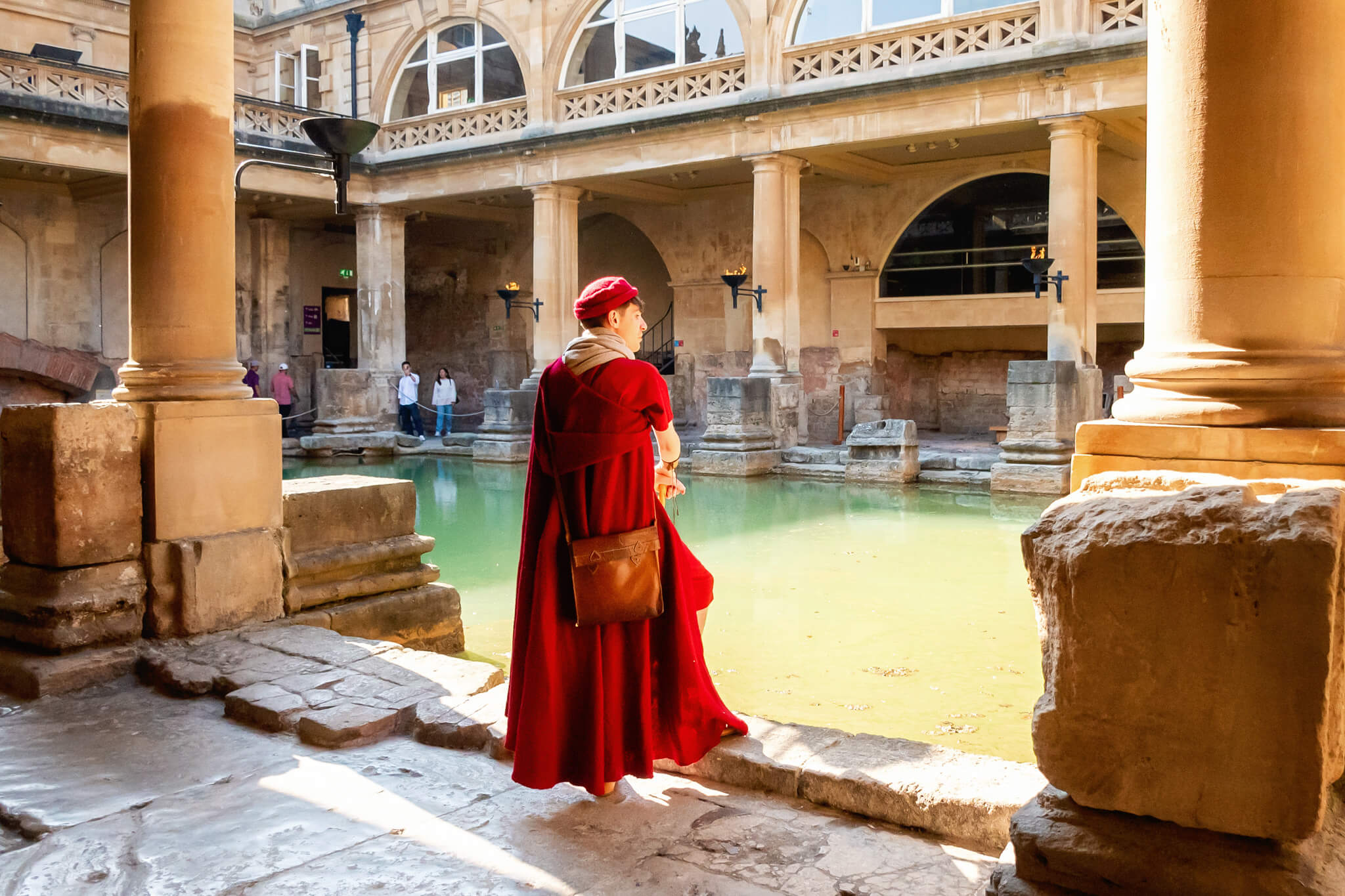
Everything you actually need to plan a smart visit to the Roman Baths in Bath, Somerset — entry prices, the quietest hours, audio-guide tips and the full story of Aquae Sulis, written by people who have walked the Great Bath at 9 a.m. and at midnight.
A short, hand-picked list of the most-booked Roman Baths activities right now — entry tickets, guided walks and combo tours that pair the museum with afternoon tea in the Pump Room or a soak at Thermae Bath Spa.
If you only read one box on this page, read this one. It answers the questions we get most in inbox emails and walking-tour groups.
| Location | Stall Street, Bath BA1 1LZ — directly beside Bath Abbey, 8 minutes on foot from Bath Spa station. |
|---|---|
| Adult ticket from | Around £27.50 weekday off-peak, up to £36.50 on summer Saturdays (peak surge pricing). |
| Opening times | Open daily; last entry usually 90 minutes before closing. Late evenings in summer. |
| Book in advance? | Yes — strongly recommended. Same-day tickets often sell out from May to September. |
| Audio guide | Included; 12+ language tracks plus a kids’ commentary and one narrated by Bill Bryson. |
| Typical visit | 1.5–2 hours. Allow 2.5 if you sit in the Pump Room or read every panel. |
| Can you swim? | No — the historic baths are not for bathing. For a thermal soak, walk 2 minutes to Thermae Bath Spa. |
Source note: Prices, hours and what’s included are taken from the official site at romanbaths.co.uk and from on-site signage. We update this page when they change — but always confirm with the operator before you travel.
The Roman Baths sit on the only naturally hot springs in the United Kingdom. Around 1,170,000 litres of water surface here every day at roughly 46 °C (115 °F), having spent perhaps ten thousand years percolating through limestone two kilometres beneath the Mendip Hills. The Romans arrived in around 60 AD, named the place Aquae Sulis after the local Celtic goddess Sulis, and built a temple-and-bathing complex that ran for almost four centuries.
What you walk through today is a layered building. The pool itself, the lead pipework and the foundations of the temple are genuinely Roman. The statues ringing the terrace above the Great Bath were carved in the 1890s — they look ancient on a misty morning but Victorian on a postcard. Above the museum sits the Pump Room, a Georgian salon where people once came to drink the spring water for their health, and where you can still try a glass straight from the King’s Spring fountain.
The site is run by Bath & North East Somerset Council and is a designated part of the City of Bath UNESCO World Heritage Site. It is one of the most visited paid attractions in the south-west of England, with around 1.3 million visitors a year — which is exactly why the timing advice further down this page matters.
Each of the pages below answers one specific question in depth. Most readers land on this site looking for prices or opening times — start there.
Adult, child, family, student and concession rates explained, including peak vs off-peak surge pricing and what is genuinely included.
See all ticket options →Daily hours by season, last-entry times, late openings in July–August and the days the site closes completely.
Check the timetable →Genuine ways to pay less: residents’ scheme, Bath students, NHS, off-peak online rates and how to avoid fake “discount” sites.
Find a real discount →How the National Rail “Days Out” 2-for-1 voucher actually works at the Roman Baths — what to print, what to show on arrival, what is excluded.
How to claim 2-for-1 →There is only one public entrance, on Stall Street next to the Abbey churchyard — but there are two queues inside. The pre-booked timed-ticket queue on the right routinely clears in under five minutes. The walk-up queue on the left can hit 40 minutes between 11:00 and 14:00 in high season. Booking online is not just about saving a pound or two; it is about not standing on cobblestones for the best part of an hour.
From our own visits across four years, here are the patterns that hold up:
Two reasons. First, the panel signage is selective; the audio fills in the temple pediment, the curse tablets and the engineering. Second, the kids’ track (ages 6–12) reframes the site as a detective story and saves families an hour of “but what is it Dad”. The Bill Bryson commentary, on a separate track, is a small joy if you are travelling solo.
The route is one-way and the public WCs are near the exit. There are accessible toilets en route, but if you have small children, the public facilities in the Bath Abbey churchyard right next door are useful before you start.
The Roman Baths ticket includes the Pump Room and the Fashion Museum voucher (when reopened). It does not give entry to Bath Abbey, the Jane Austen Centre or Thermae Bath Spa — those are separate. For a thermal soak after your visit, walk two minutes to Thermae’s rooftop pool; it is one of our favourite half-days in the UK.
The standard entry ticket covers everything you actually need to understand the site. Combo tours add convenience — a transfer from London, a guide, or a second attraction stitched onto your day. Pick by what your day looks like, not by which option is cheapest.
| Option | Includes | Best for | Indicative price |
|---|---|---|---|
| Standard entry + audio guide | Full museum, Great Bath, temple, Pump Room, 12-language audio | Most independent visitors already in Bath | From £27.50 |
| Guided walk + entry | Small-group expert guide, skip-the-queue entry, 90-min commentary | History-curious travellers, solo visitors | From £45 |
| Bath day trip from London | Coach transfer, optional Stonehenge stop, Roman Baths entry | London-based tourists with one free day | From £95 |
| Roman Baths + Thermae Spa | Museum entry plus 2-hour rooftop thermal session | Couples, anyone wanting the “actually warm water” part | From £65 |
Heads-up: prices on combo tours fluctuate weekly with demand. The live widget at the top of this page pulls the current rate from GetYourGuide rather than a number we hard-coded six months ago.
Skip the walk-up queue. Live availability and instant mobile tickets.
Check times & book →Bath Spa station is on the GWR main line. London Paddington takes about 1 h 25 m; Bristol Temple Meads 12 minutes; Cardiff Central around 1 hour. From the station, the Roman Baths are an 8-minute level walk through the pedestrianised SouthGate shopping streets — no taxi needed.
Bath has an active clean-air zone and famously punitive parking. Use Lansdown or Odd Down Park & Ride and ride the bus in (around £4 return per adult, kids often free). Driving into the city centre to “just drop the bags” will cost you more than the train fare from Bristol.
National Express coaches stop at Bath bus station next to the train station. Megabus runs cheaper services from London Victoria; budget around 3 hours one-way.
No. The historic baths have not been used for bathing since 1978, after a fatal case of meningitis was traced to the water. For a thermal swim in Bath, head to Thermae Bath Spa, which uses the same spring water filtered and reheated.
Plan for 90 minutes if you are pacing yourself, 2 hours if you use the audio guide properly, and 2.5 hours if you also have lunch or afternoon tea in the Pump Room.
Yes — the kids’ audio guide is genuinely good, costumed “Roman characters” roam the site at weekends, and children under 6 enter free. Buggies are allowed but the site has multiple staircases; a baby carrier is easier.
The main museum route is accessible via lifts and ramps, but the East Baths and the lower terraces involve steps. The operator offers a free essential companion ticket and a detailed access guide on request.
Standard timed tickets bought through the official site are typically non-refundable after the slot. Many third-party resellers, including the one our widget links to, offer free cancellation up to 24 hours before — check the terms on the booking screen.
The Roman Baths are a museum — you look, you do not swim. Thermae Bath Spa is a modern spa using the same thermal spring water; you can swim, sauna and use the famous open-air rooftop pool. Many visitors do both in one day.